Medical Laboratory Technician · Hematology · Muscat

Accurate hematology results, every shift.

Medical Laboratory Technician in the Hematology Laboratory at Sultan Qaboos University Hospital. I work across automated hematology, coagulation, hemoglobin analysis and blood bank testing.
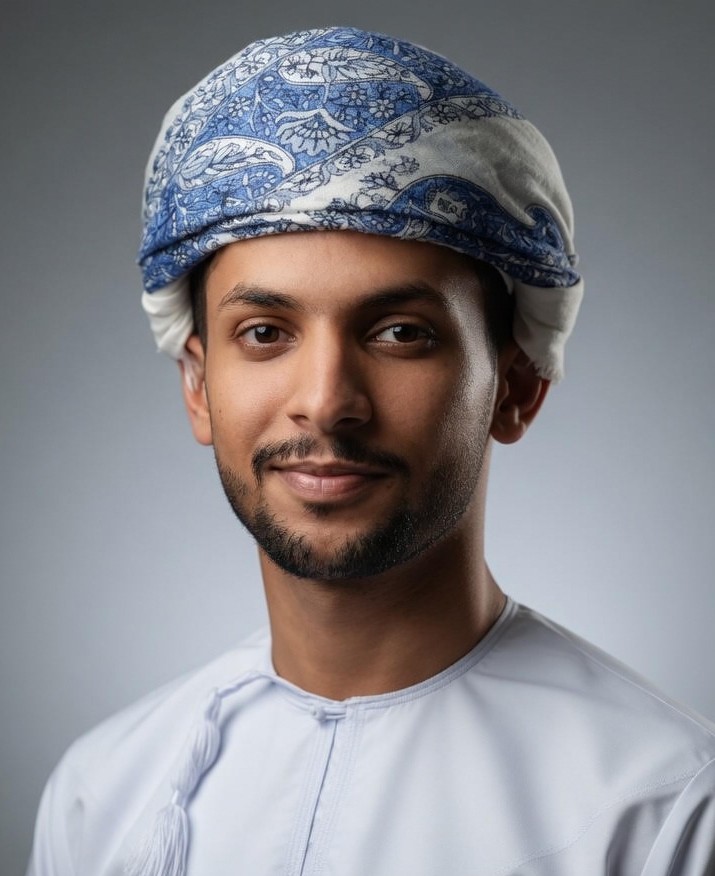
Portrait of Haitham Alfarsi
Hematology LaboratorySQUH · University Medical City
OMSBLicensing exam passed, 2025
7Hematology-lab analyzers
2First-author papers
Jan 2026Joined SQUH Hematology
About

I am a Medical Laboratory Technician in the Hematology Laboratory at Sultan Qaboos University Hospital. I work across automated hematology, coagulation, hemoglobin analysis and blood bank testing. I graduated in Biomedical Sciences from Sultan Qaboos University in 2025 and have published two first-author review papers.

Scope of practice

Four disciplines.
One bench.

Automated hematology

CBC analysis, blood film preparation and review of analyzer flags.

Coagulation

PT, APTT, fibrinogen and thrombin time screening, and mixing studies.

Hemoglobin analysis

Hemoglobin variant analysis by HPLC for thalassemia and sickle cell screening.

Blood bank

Blood grouping, direct antiglobulin testing and compatibility testing.

The bench

Analyzers in the Hematology Laboratory.

Hematology

Sysmex XN-9000

Automated CBC analysis.

See the method →

Coagulation

Sysmex CN-3000

PT, APTT, fibrinogen, thrombin time and mixing studies.

See the method →

Slide preparation

Sysmex SP-50

Automated blood film preparation and staining.

Hemoglobin

Bio-Rad Variant II

HPLC analysis of hemoglobin variants.

See the method →

Blood bank

Bio-Rad IH-1000

Immunohematology: grouping and DAT.

See the method →

Chemistry

Mindray BS-240 Pro

Chemistry analyzer used for G6PD testing.

Coagulation backup

Stago STart Max

Mechanical clot detection for backup testing.

Experience

Where I work and where I trained.

Medical Laboratory Technician, Hematology Laboratory

Sultan Qaboos University Hospital, University Medical City · Jan 2026 to present

Routine hematology and coagulation testing across day, evening and night shifts, with rotations in the Main Lab, Blood Bank and Special Hematology.

B.Sc. Biomedical Sciences, Sultan Qaboos University

College of Medicine · Graduated Sep 2025 · OMSB exam passed Aug 2025

Programme accredited by the UK Institute of Biomedical Science (current accreditation 2025-2029), with clinical placement. Clinical rotations at SQUH and other Omani hospitals in hematology, biochemistry, microbiology and histopathology.

Laboratory skills
CBC and blood filmPT, APTT, fibrinogen, TTMixing studies Hemoglobin analysis by HPLCBlood bank, DAT and crossmatching G6PD testingQuality controlLaboratory safetyShift-based teamwork
Languages
Arabic (native)English (fluent)
Publications

Two papers. First author on both.

Full record on ORCID (0009-0003-9540-1033).

2026
First author · Review

Beneficial Effects of the Ketogenic Diet on Various Systems of the Body: Understanding the Mechanism of Action

Current Nutrition & Food Science 22(9): 725-739, May 2026. With Al-Busaidi, Alhabsi and Das.

Invited by Bentham Science to feature this article in its Kudos showcase.

Read paper (DOI)
2025
First author · Review

Sleep Disturbances Associated with Different Systems of the Body: Underlying Mechanisms Involved and Consequences

Current Medicinal Chemistry 32(34): 7624-7650, Apr 2025 (Q2, Scopus-indexed). With five co-authors.

Read paper (DOI)
Conferences & volunteering

Learning beyond the bench.

8th Omani Society of Hematology Conference (OSHC 2026)

8-10 October 2026 · JW Marriott Muscat

Attended the full conference as a delegate.

International Medical Students' Conference (IMSRC)

June 2025

Certificate of Appreciation.

Medical Education Conference: Innovation & New Technologies

10-12 February 2025 · Sultan Qaboos University

Certificate of Attendance (OMSB CPD accredited).

Volunteer, SQUH Health Awareness Campaigns

2023-2024

Supported public education on health screening and disease prevention, and helped organise blood donation drives.

Methods

How the bench works.

Four interactive explainers on the analyzers in my section. Swipe left or right, or use the buttons.

Hemoglobin analysis · Bio-Rad Variant II

From run to chromatogram.

Cation-exchange HPLC separates hemoglobin fractions by charge. Each peak is one fraction. The patterns below follow the Ministry of Health national SOP for Variant II results (MoH/DGHS&P/SOP/013, 2026).

My role

I operate the Variant II. I run and review QC and calibrators, and I document and store specimens.

Interpretation and reporting

I do not interpret or report these results. The haematology supervisor and the hematopathologist do, as the national SOP defines.

Swipe sideways to see the whole chart.

Illustrative hemoglobin HPLC chromatogram
HbF HbA0 HbA2 window (HbE co-elutes here) HbD HbS HbC Early peak (Bart's position)
F 1.10 min (0.98-1.22)A0 2.50 (1.90-3.10)A2 3.60 (3.30-3.90)D 4.10 (3.90-4.30)S 4.50 (4.30-4.70)C 5.10 (4.90-5.30)

Illustrative chromatograms for teaching, drawn from the typical ranges in the national SOP. Not patient data. Retention windows vary slightly by lot, software and column age. Omani literature also describes Hb S-Oman, a sickle variant that needs electrophoresis and DNA testing to identify.

Sysmex XN-9000

Counting cells with light.

Three principles run side by side. Fluorescence flow cytometry with a 633 nm semiconductor laser classifies white cells, reticulocytes and platelets. Sheath flow DC detection counts and sizes red cells and platelets. SLS-hemoglobin spectrophotometry measures hemoglobin. Every cell becomes one event.

Schematic of the principle with simulated cells. Cluster positions are simplified and are not patient data. WPC is available on analyzers configured with it and is used on flagged samples.

Selective lysis, step by step.

Before a sample reaches the flow cell, reagents prepare the cells. Lysing reagents remove red cells and open white cell membranes, and a fluorescent dye then binds nucleic acids. Each channel uses its own reagents.

Simplified animation. Real reaction times, volumes and reagent chemistry are set by the manufacturer. Lysercell WNR is more acidic than Lysercell WDF (pH 2.95-3.05 per the manufacturer).

Sysmex CN-3000

Watching a clot form.

The analyzer shines light through plasma in a cuvette. As fibrin forms, less light passes through. A detector tracks the transmitted light, which starts at 100% and falls, and the instrument reads the clotting time.

Schematic of the principle with simulated curves. Times are examples, not patient data or reference ranges.

Blood bank · Bio-Rad IH-1000

Finding the antibody, cell by cell.

When the antibody screen is positive, the serum is tested against a panel of known red cells. Cells that do not react rule antigens out. The antigen left standing is the likely specificity.

1 Run the panel2 Record reactions3 Rule out4 What remains5 Confirm

Swipe sideways to see the whole table.

Educational example with fictional panel cells. Antigen dosage is not applied here. Antibody identification and reporting follow laboratory procedure and authorized staff.

← Swipe →

Contact

Let's connect.

Get in touch for professional connections or collaboration. My CV is available on request.

hythmalfarsy300@gmail.com